
Live Performances and Trailers Cause Seizure Effects and Migraines at The Game Awards
Disabled players discuss the negative impacts of flashing lights during this year's The Game Awards.


(Editor's note: I will not be linking the trailers or embedding them to avoid triggering others)
On December 11, The Game Awards continued its annual tradition of showcasing industry talent through awards and a bevy of new game reveals. This year, host and creator of the show, Geoff Keighley, cozied up with Muppets like Miss Piggy, welcomed the entire cast of the Street Fighter movie to showcase a new trailer, and as expected, revealed World Premieres. Yet, for some disabled viewers, the excitement of new games was replaced by immense physical and emotional discomfort.
Throughout the 3 ½ hour show, trailers and their introductions for games like Divinity and Control: Resonant featured intense strobe lighting effects, as well as disturbing imagery. As a result, some disabled individuals were forced to stop watching the Awards entirely. Speaking with Access Granted, disabled viewers discuss the negative impacts of certain trailers, and how industry standards need to be raised when accounting for photosensitive and epileptic viewers.
Flashy Trailers and Real-World Harm
Every year, Keighley’s show is highly anticipated, especially for new game announcements. In an age where industry events like E3 are no more, The Game Awards fills the void of a large-scale industry event that advertises new games and content. This is exactly why Seraphina tunes in. Yet, they note the show this year caused seizure-like symptoms, something that did not occur in previous years.
“The Audio Mech, TankRat, Stupid Never Dies, Divinity, and Control: Resonant trailers hit me hard,” they said. “I had to step away from watching after Resonant's trailer as I was feeling nauseous, dizzy, and physical pain from viewing them. I did have seizure aura symptoms for a short time, but I put myself into pure darkness as fast as possible, which helped it not come to fruition.”
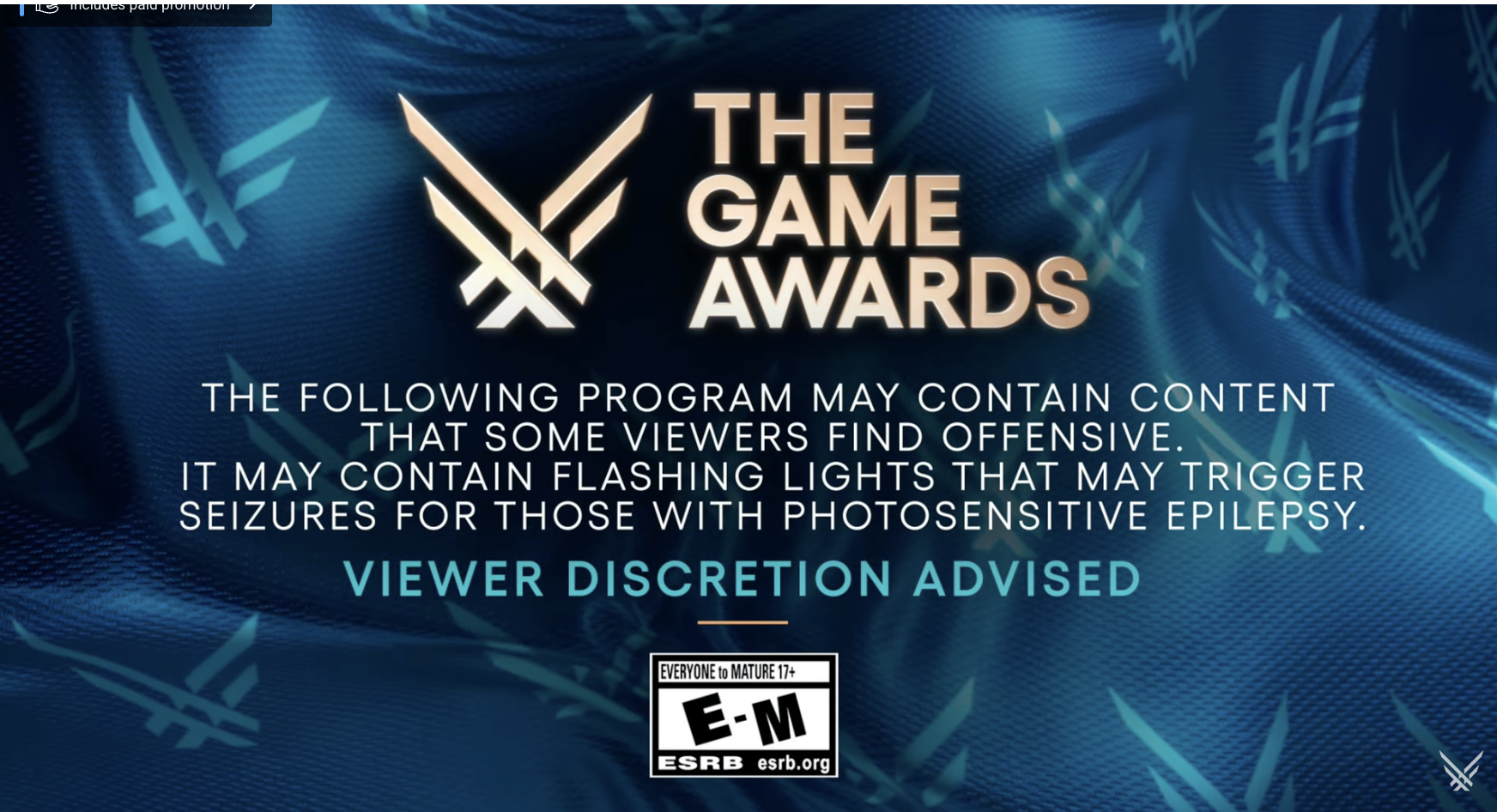
They explain no general content and epileptic warnings were provided before each announcement. Instead, a generic seizure and photosensitive announcement was shown once before the beginning of the show. "It's not like blanket warnings for a 3hr+ show is very helpful, anyways."
Yet, for disabled players like Seraphina that missed the warning, there was no indication of which World Premieres would potentially trigger effects. This resulted in approximately four hours of pain, something that Seraphina states is a growing trend in the industry.
“I genuinely can't remember other Game Awards affecting me this badly,” they said. “As for trailers and shows in general, I've noticed a big uptick in the past few years of flashing lights, especially with advertisements. There were so many that I can't recollect them because I just immediately turn away or turn them off.”
The Growing Trend of Flashing Lights
At its core, The Game Awards are a marketing event. Studios reveal projects, whether new games entirely or additions to existing titles, to millions of viewers. And this year was no different. According to statistics released by The Game Awards, approximately 171 million people watched this year’s show across digital platforms, an 11% increase from last year. While this is a fantastic event to reveal projects to the masses, Sev Larson, like Seraphina, was another of the 171 million viewers negatively impacted by reveals this year, something that Larson notes is a relatively new issue.
“It felt like for a period there weren’t as many flashing lights in video games,” Larson said. “When I was growing up, I didn’t have to worry about [flashing lights] so much. I remember being really impressed because the Metro 2033 trailer had an epilepsy warning at the beginning. I wish trailers would include that if they have flashing lights, but ultimately, I just wish they wouldn’t have flashing lights.”
The Game Awards are not the only showcase to provide inadequate warnings for viewers. This year, Xbox’s varied Showcases and PlayStation’s State of Plays only gave generic content advisories at the beginning of each show. While both Xbox’s and PlayStation’s videos were notably shorter than The Game Awards, averaging approximately 45 minutes-one hour per show, disabled individuals like Seraphina and Larson were ultimately unaware of which game would trigger photosensitive symptoms. Yet, as Larson explains, The Game Awards posed a unique issue unavailable through prerendered trailers – the dramatics of a live production, especially when unveiling Larian Studios’ Divinity.
“I don’t even think it was the trailer itself,” they said. “The reveal at The Game Awards had this whole lightning thing going on, and these weird flashing lights on the screen that aren’t there in the actual trailer. I think there was an interactive piece with the audience. It was very intense with flashing lights.”
For years, Keighley’s show has leaned heavily into theatrics. From celebrities like Al Pacino presenting the Best Performance Award in 2022, to the annual finale featuring The Game Awards’ own orchestra, viewers are expected to be wowed by surprise appearances and extravagant showings. And to fit the themes of opulence and grandeur, studios find themselves upping the ante each year. For Larian Studios, this meant suspending actors from trapeze wires, while also simulating an intense lightning storm with strobing effects. Remedy Entertainment used a similar format, with trapeze wires and strobe lighting that mimicked a kaleidoscope. Larson explains these theatrics ultimately triggered a migraine.
“I immediately had to look away from [Divinity] because it was an instant migraine trigger for me,” they said. “[The Control] one had even more flashing lights, and I had to put my arm up to shield myself from the screen because looking away wasn’t enough. Which is unfortunate, because I really like Control. It’s frustrating because I want to play these games and I want to enjoy these games.”
When reached for a comment on flashing lights and plans to avoid these issues, The Game Awards only referenced the message at the beginning of the show. It’s unclear if steps will be taken in the future to mitigate flashing lights for reveals and trailers. For now, those with photosensitivity must gamble with each showcase. Do you risk triggering migraines or seizures to watch, or do you continue to miss out on in industry that proclaims to celebrate disabled players. And as Seraphina notes, flashy trailers do nothing but exclude disabled individuals from enjoying shows like everyone else.
“None of them needed the massive flashing lights,” they said. “No warning before each of them also makes it a little bit painful. It feels like I must choose between possible seizures or just straight up not watching anything next year. I just want to keep up with an industry I enjoy!”